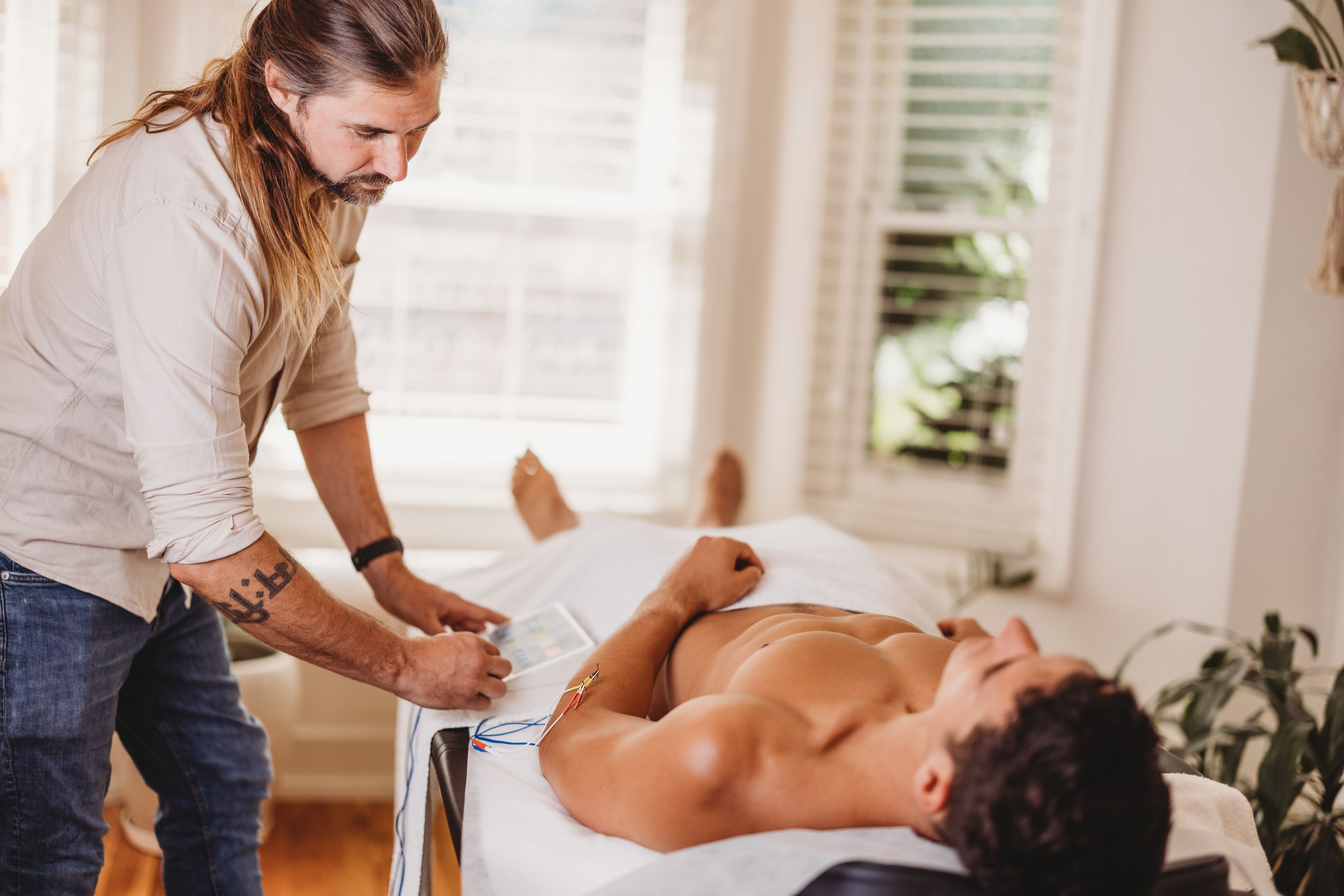
Two days. Sixteen contact hours. One protocol, taught in full, on real tissue.
| Time | Session | Format |
|---|---|---|
| 08:30 – 08:45 | Registration & Welcome | — |
| 08:45 – 10:45 | Trigger Point Theory & Pain Science (Module 1) | Theory |
| 10:45 – 11:00 | Morning Tea | Break |
| 11:00 – 13:00 | Neurophysiology of Dry Needling & The Resonance Needling Protocol (Module 2) | Theory |
| 13:00 – 13:45 | Lunch | Break |
| 13:45 – 15:15 | Clean Technique, Consent & Adverse Event Management (Module 3) | Theory |
| 15:15 – 15:30 | Afternoon Tea | Break |
| 15:30 – 18:00 | Practical: Palpation, Assessment & Upper Body Needling | Practical |
| Time | Session | Format |
|---|---|---|
| 08:30 – 08:45 | Recap & Day 2 Overview | — |
| 08:45 – 10:45 | Clinical Integration & Treatment Planning (Module 4) | Theory |
| 10:45 – 11:00 | Morning Tea | Break |
| 11:00 – 13:00 | Practical: Lower Body Regions & Resonance Needling Stimulation | Practical |
| 13:00 – 13:45 | Lunch | Break |
| 13:45 – 15:45 | Practical: Full-Body Integration — Supervised Treatment Circuits | Practical |
| 15:45 – 16:00 | Afternoon Tea | Break |
| 16:00 – 18:00 | Competency Assessment & Certification | Practical |
Pain science, referral patterns and evidence base behind trigger point palpation.
Assess, palpate, needle, stimulate, retest — the full five-step cycle, per point.
Upper and lower body needling, practised across the full cohort under supervision.
Consent, sharps handling and adverse event management to a clinical standard.
Where Resonance Needling fits inside a treatment plan and existing scope of practice.
Live demonstration and supervised practice with the electropen used in Phase 1 and Phase 2 stimulation.
Brisbane 2026 — registrations open now.
Register for Brisbane 2026