01
Shah et al., 2008
Trigger points show measurably elevated inflammatory and neuroactive chemical markers at the site — and those markers change with successful treatment.
Shah JP et al. Biochemicals associated with pain and inflammation are elevated in sites near to and remote from active myofascial trigger points. Arch Phys Med Rehabil, 2008.
02
Han, 2003
Different electrical stimulation frequencies trigger different neurochemical responses — low frequency favours endorphin release, high frequency favours dynorphin. The physiological basis for a two-phase stimulation protocol.
Han JS. Acupuncture: neuropeptide release produced by electrical stimulation of different frequencies. Trends Neurosci, 2003.
03
Zuccolotto Moro et al., 2024
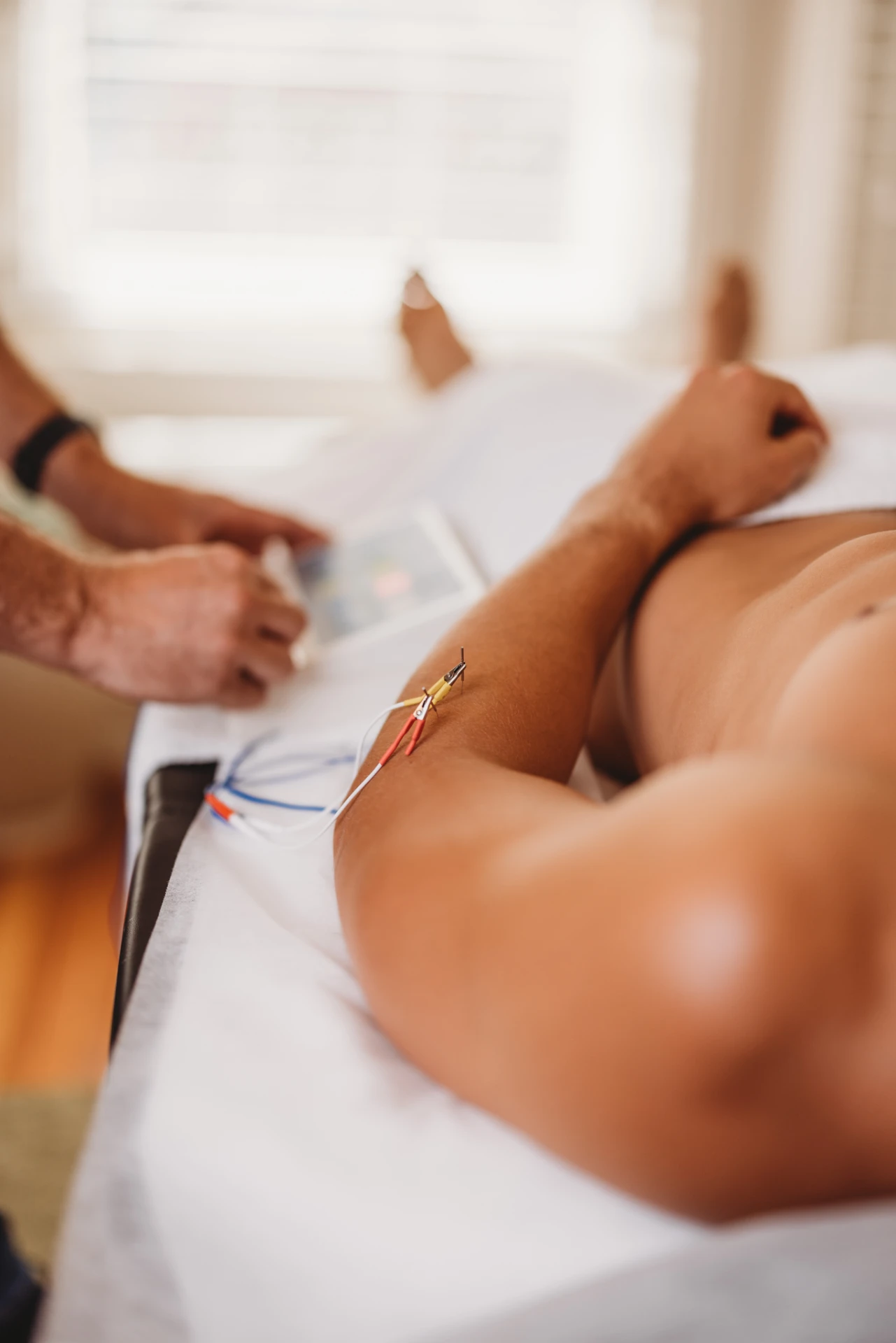
A randomised controlled trial found needling combined with electrical stimulation produced better outcomes than manual needling alone — the direct rationale for integrating the Pointer Excel II into the protocol.
Zuccolotto Moro et al. Randomised controlled trial, 2024.
04
2025 IJSPT Consensus
A 2025 consensus statement formalised current standards for safe, effective trigger point dry needling training and clinical delivery.
International Journal of Sports Physical Therapy, 2025 Consensus Statement on Dry Needling.
05
Gattie et al., 2017
A systematic review and meta-analysis found dry needling by manual therapists produces significant, moderate short-term pain reduction compared to other treatments.
Gattie E, Cleland JA, Snodgrass S. The Effectiveness of Trigger Point Dry Needling for Musculoskeletal Conditions by Physical Therapists: A Systematic Review and Meta-analysis. J Orthop Sports Phys Ther, 2017.
06
Hong, 1994
The landmark study establishing that eliciting a local twitch response during needling is associated with better clinical outcomes — the basis for the palpate step of the protocol.
Hong CZ. Lidocaine injection versus dry needling to myofascial trigger point. The importance of the local twitch response. Am J Phys Med Rehabil, 1994.